



Asma Hamza: The Pioneering Sudanese Composer Who Gave Africa a New Musical Voice

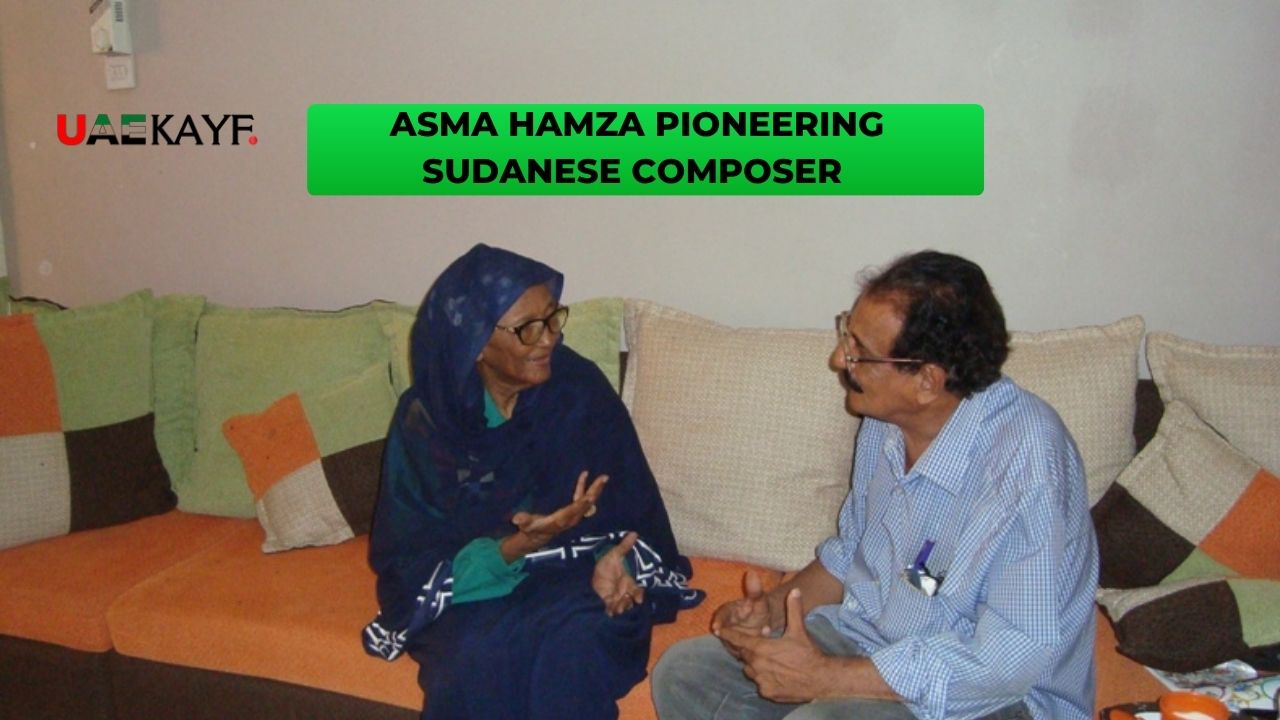
Introduction: A Voice the World Rarely Heard
What do you think about the possibility of meeting a woman who enters the concert hall and presents a symphony to the orchestra? Would you consider such an event happening in any country in the world? However, it is hard to believe that this happened in Sudan during the second half of the twentieth century.
However, Asma Hamza did enter the concert hall and presented her work there. Unfortunately, African classical music composers, and female composers in particular, were marginalized during the last century, and their names are hardly known throughout the globe today. Nonetheless, this article will introduce you to one of the leading Sudanese composers of the twentieth century,, whose contribution to Sudanese classical music needs to be discussed and recognized.
Who Is Asma Hamza? A Voice Born Before Its Time
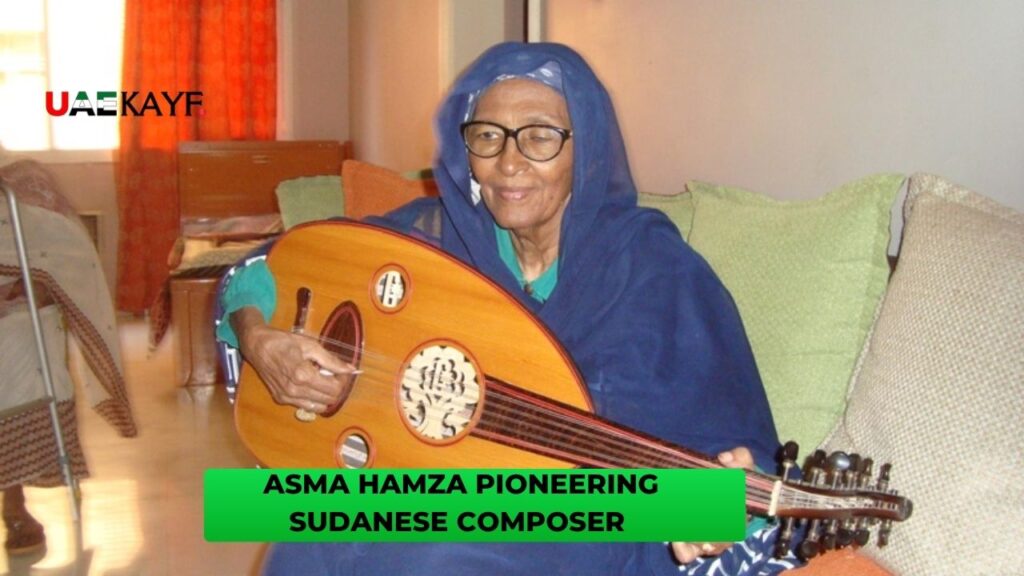
Biography and Early Musical Influence
Being a native of Sudan, the country rich with multiple cultures due to the fact that it combines the elements of Arab, African, and ancient Nilotic culture, Asma Hamza was influenced by a wide variety of different music from the very beginning of her life. For instance, she used the rhythms of call-and-response songs of Nubian villages, melodies based on maqam in Sudanese folk music, as well as rhythmic structures used in Sub-Saharan African music.
During the time when the composer entered the sphere of professional music, Sudan was a country with a rapidly changing music culture due to colonialism that led to the transformation of social and cultural values and the rise of the influence of the Western world in the culture of Sudan. During this period, women had limited career options; however, Asma Hamza managed to become an outstanding musician despite all the difficulties.
| Quick Answer — Who Is Asma Hamza?Asma Hamza is a pioneering Sudanese composer widely regarded as one of the most significant figures in African classical music. She broke gender and cultural barriers in 20th-century Sudan by composing formal orchestral and traditional fusion works at a time when women in her society were rarely encouraged to pursue music as a serious intellectual craft. |
Education and Musical Training
Unlike many of her female contemporaries, the composer managed to get a higher musical education in Sudan and started her career as a musician. Thus, Asma Hamza became familiar with both indigenous and classical music culture and started combining it with Western structures. In other words, the dual knowledge of music was her biggest advantage as an author.
Moreover, being able to apply her skills in both Sudanese and Western music allowed Asma Hamza to combine both worlds successfully and develop innovative music that became characteristic features of the Sudanese composer.
| Did You Know?According to UNESCO’s data on global arts participation, women have historically represented fewer than 15% of formally credited composers across Africa and the Arab world combined — making Asma Hamza’s achievements even more remarkable in historical context. |
The Cultural Environment That Shaped Her Art
Due to its geographical location, Sudan has been influenced by multiple neighboring cultures, which resulted in a unique musical environment in which Asma Hamza could easily thrive. Nubian pentatonic scales — one of the oldest musical systems in the world
- Arab maqam modes brought down the Nile through centuries of cultural exchange.
- Sub-Saharan rhythmic structures with deep roots in African ceremonial music
- The emerging hybrid sounds of 20th-century urban Khartoum
As a result, Asma Hamza managed to combine different music structures successfully and create compositions that had a Sudanese cultural background.
Breaking Barriers — Asma Hamza’s Journey as a Female Composer in Sudan
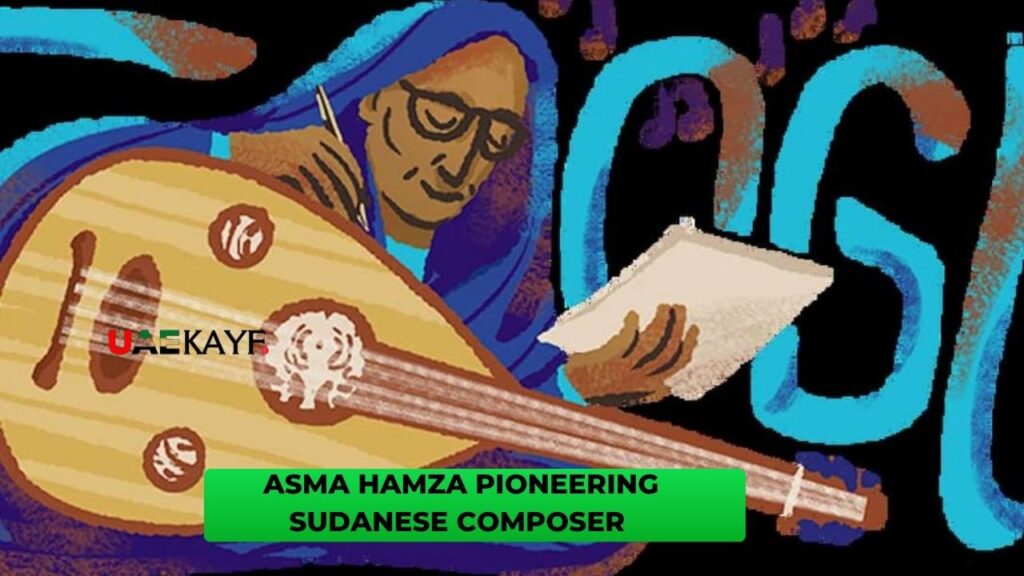
The Role of Sudanese Women in Music During the Mid-20th Century
To estimate the uniqueness and innovation in Asma Hamza’s activity and creations, it is crucial to consider the role of women in Sudanese music during this period of time. During the colonial period, women in Sudan were encouraged to participate in musical activities as long as the performance took place in their homes. Nevertheless, as soon as a woman tried to go outside this framework, she was expected to face numerous obstacles.
Thus, women could be involved in music only as singers. As soon as the woman wanted to play an instrument or compose some music, she faced a lot of criticism in her family and community, and it was difficult to find any institution ready to assist a female musician.
How She Challenged the Status Quo Without Losing Her Identity
Thus, Asma Hamza needed to overcome numerous challenges related to her position as a female in the music society of the 1950s in order to make a step in her career development and create compositions.
Firstly, the female had to prove that Sudanese folk music was capable of developing and could be included in the sphere of classical music. Secondly, she managed to prove that there was a possibility of writing an orchestral composition that reflected Sudanese musical culture.
Her Achievements and Firsts — What Has Asma Hamza Accomplished?
Significance of Being a Sudanese Woman Composer Amongst Other Composers
The achievements of Asma Hamza allow for estimating her significance among other composers. For example, her main achievements include the following accomplishments:
- Among the first Sudanese women to compose formally notated orchestral and ensemble works
- Among the first composers in Sudan to systematically bridge Western classical structures with indigenous Sudanese musical forms
- A pioneering figure in establishing the legitimacy of formal music education for women in Sudan
- One of the earliest African women composers to have her work preserved in institutional archives
All the mentioned accomplishments required effort and hard work from the composer, but they contributed significantly to the development of Sudanese music.
| Key Insight for Educators Asma Hamza’s career offers a powerful case study in how identity, gender, and colonial-era cultural pressures shaped who was allowed to create formal art — and who was not. Her story belongs in music education curricula worldwide. |
The Music Itself — Asma Hamza’s Compositional Style and Key Works

Unique Features of Asma Hamza’s Musical Compositions
The music of Asma Hamza is distinguished by two main characteristics. Firstly, the compositions of the author demonstrate the presence of both discipline and freedom. On the one hand, her works are characterized by the presence of notations and strict rules, and on the other hand, the music of the author is characterized by the spontaneity of performance and the ability to convey emotions through music.
Thus, the composer uses the following techniques in her music:
- Pentatonic scales drawn from Nubian and broader Sudanese folk traditions
- Maqam modes, reflecting the Arab musical heritage of northern Sudan
- Polyrhythmic layering inspired by African ceremonial drumming traditions
- Call-and-response patterns adapted for formal ensemble settings
- Indigenous Sudanese instruments are incorporated alongside or in dialogue with Western orchestral voices
Such an approach allowed her to create compositions that combined Sudanese culture and the Western classical structure.
Notable Compositions and Musical Legacy
The works of Asma Hamza are various in genre; in particular, her compositions range from solo instruments and ensembles up to orchestras and bands. Besides, the themes that she used in her music reflected Sudanese culture and life.
According to the analysis conducted by scholars, the works of Asma Hamza are characterized by such features as:
- Her melodic lines have a singing quality even when written for non-vocal instruments
- Her harmonic language blends modal (maqam) thinking with occasional Western chord progressions
- Her rhythmic structures are sophisticated but always grounded in a felt, human pulse
- Her works are often described by performers as both technically demanding and emotionally transparent
Currently, the music of Asma Hamza can be explored via the records of the Sudanese National Library, African music archives, and internationally via the Smithsonian Folkways Collection and the British Library Sound Archive.
Themes and Stories Reflected Through Asma Hamza’s Music
The music of Asma Hamza has always been connected to themes related to the lives of Sudanese women. The composer paid a lot of attention to the problem of oppression and marginalization experienced by African women during this period of time.
- The beauty and hardship of daily Sudanese life
- The struggle for cultural self-determination in a post-colonial world
- The role of women in Sudanese society — sometimes directly, more often through the emotional subtext of the music itself
- The relationship between the ancient and the modern, the folk and the formal
As a result, Asma Hamza’s music tells the story of Sudanese culture.
Asma Hamza’s Place in the Global Music Canon — And Why She Has Been Overlooked
The Problem of African Music’s Erasure in Global History
Why do people know the name of Johann Sebastian Bach, for instance, and have never heard about Asma Hamza? Of course, it is impossible to argue that the work of African composers has been less innovative compared to the work of Europeans. However, it is necessary to take into consideration the fact that Western colonizers had negative attitudes towards African culture and considered it to be primitive and unworthy.
At that period of time, it was not considered appropriate to preserve African music compositions in music schools and universities. Thus, the lack of interest from the side of the authorities resulted in the neglect of Asma Hamza’s work.
The Resurgence of Interest in African Classical Composers
Fortunately, it is possible to notice that African female composers attract the growing interest of the public due to the following trends:
- Digital archives are making previously inaccessible recordings and scores available globally
- Streaming platforms report consistent year-on-year growth in African music consumption worldwide
- Academic institutions are revising curricula to include non-Western compositional traditions
- Diaspora communities are actively working to document and share the cultural heritage of their home countries
- Organizations like the African Music Encyclopedia and the International Council for Traditional Music are expanding their documentation work.
These trends result in a re-evaluation of the contributions of composers like Asma Hamza.
Comparing Asma Hamza to Global Pioneering Composers
If we try to compare the work of Asma Hamza with the work of other pioneers in the field of music composition, such a comparison will look as follows:
| Composer | Context & Significance |
| Florence Price (USA) | First African American woman to have a symphony performed by a major U.S. orchestra — rediscovered in the early 2000s after decades of neglect |
| Margaret Bonds (USA) | Groundbreaking Black American composer and pianist who faced both racial and gender discrimination in the U.S. classical music world |
| Nadia Boulanger (France) | First woman to conduct major orchestras in Europe — a giant of 20th-century Western music education |
| Asma Hamza (Sudan) | Pioneering Sudanese composer who bridged African, Arab, and Western musical traditions in a deeply conservative social context — a story still being fully told |
Compared to other pioneers, the composer’s work is characterized by unique features since, unlike Florence Price and Margaret Bonds, she created compositions of the country in which she lived and fought for her rights in an environment with strict social stratification.
Cultural Impact — How Asma Hamza Shaped Sudanese Identity Through Music

National Identity in Sudanese Culture as Shown Through Its Music
Asma Hamza created her compositions during the period of Sudanese independence (the 1950s). At this time, the national identity of this country was rapidly developing and shaping due to political turbulence.
In this context, the role of music is obvious since, through her works, Asma Hamza conveyed her views on the development of this country and its culture. Moreover, the works of the author were included in cultural programs that used radio broadcasting and public concerts to promote Sudanese music.
Influence on the Next Generation of Sudanese Artists
Of course, it is possible to speak about the impact of Asma Hamza on other Sudanese artists in terms of the effect that her music produced. In this case, the influence of the artist can be considered at two levels:
- Direct influence: Musicians who studied under her or with people she trained carry her compositional philosophy forward in their own work
- Symbolic influence: Her existence as a woman who composed seriously in Sudan opened a door that had previously been invisible many younger Sudanese women musicians point to her as proof that the path existed.
In other words, the work of the composer affected two generations of women artists.
Asma Hamza and the Sudanese Diaspora’s Musical Memory
Currently, a significant number of Sudanese people live abroad. Therefore, it is important to discuss the influence of Asma Hamza on their music culture. For the members of the Sudanese diaspora, the music of Asma Hamza serves as a link with their homeland, and thanks to the activities of cultural communities, the works of Asma Hamza were preserved and kept alive.
Therefore, thanks to the diasporic communities, the memory of Sudanese culture and the history associated with it is preserved.
How to Explore Asma Hamza’s Music Today — Resources and Archives
| Resource Type | Where to Look |
| Audio Archives | British Library Sound Archive, Smithsonian Folkways, YouTube channels focused on African classical and traditional music |
| Academic Research | JSTOR, Ethnomusicology Forum (Taylor & Francis), African Music journal (International Library of African Music) |
| Biographical Info | African Music Encyclopedia, Sudan National Library, UNESCO Intangible Heritage databases |
| Educational Context | Kofi Agawu’s Representing African Music; John Collins’s writing on African popular and classical traditions |
| Community Sources | Sudanese diaspora cultural organizations; African music forums and social media groups |
- Currently, it is possible to listen to the music of Asma Hamza in the following ways:
- Via digital archives of the Sudanese National Library and the African Music database
- Online via the website of the Smithsonian Folkways and the website of the British Library Sound Archive
- Involvement of local communities in discussions regarding Sudanese classical music and its authors
- Participation in concerts where the music of the composer is played
What the World Can Learn From Asma Hamza’s Story
Educational Lessons for Music Curricula
The work of Asma Hamza teaches us that music curricula should include not only information about the famous European composers but also the examples of works created by African and South American musicians, in particular. In other words, it is necessary to diversify the educational process.
Institutional Lessons on Preserving Music Heritage
Institutions responsible for the protection of musical heritage should reconsider the choice of composers whose work they decide to save. In addition, it is vital to find and restore the music heritage of forgotten composers.
Musical Lessons and Motivation for New Female Musicians
In this case, the work of Asma Hamza inspires female musicians to start their careers and develop their talents. The work of Asma Hamza teaches us that every female composer in Sudan has the right to express herself and share her thoughts with the audience.
Conclusion
A Legacy That Belongs to the World Asma Hamza wrote music in a country that was trying to figure out its identity. She was a woman in a society that insisted that composition was not meant for women. She composed classical music based on a number of musical traditions that the wider world thought to be nothing but folklore – and she made them a formal music. Every melody Asma Hamza composed was an act of defiance and devotion – to her nation, her craft, and all future musicians looking for their place.
Frequently Asked Questions About Asma Hamza
What Type of Music Has Asma Hamza Composed?
Asma Hamza composed classical music combining the elements of Western and Sudanese music.
What Are Some Difficulties Encountered by Asma Hamza as Composer?
Besides common difficulties like learning musical skills and acquiring the sense of harmony, Asma Hamza encountered gender-related barriers. According to the beliefs of the society at that time, only men could compose as it was assumed that composing required creativity and intelligence while it could hardly be called ‘a female thing’. Consequently, along with personal struggle and obstacles related to mastering music composition skills, Hamza had to confront gender bias within educational and musical institutions.
In What Ways Does Asma Hamza’s Music Influence Modern Sudanese Music?
First of all, the approach to music composition developed by Asma Hamza turned out to be fruitful and started to influence other Sudanese composers and educators from then on