


Varta Battery vs Standard Car Batteries: What Should Drivers Know?

Ask most drivers what separates a premium battery from a standard one, and the honest answer is usually “not much, until it fails.” On paper, a lot of car batteries look similar: same general shape, similar terminals, comparable price at a glance.
The real differences show up in how they perform after a year of Dubai summers, not on the shelf. Here’s what actually sets a Varta battery apart from a standard one, and where that difference genuinely matters.
What’s Actually Different Inside the Battery
Standard car batteries, often called SLI batteries (Starting, Lighting, Ignition), use a basic flooded lead-acid design that’s been around for decades. It works fine for older vehicles with modest electrical demands, but it wasn’t built for constant charge cycling or heavy accessory loads.
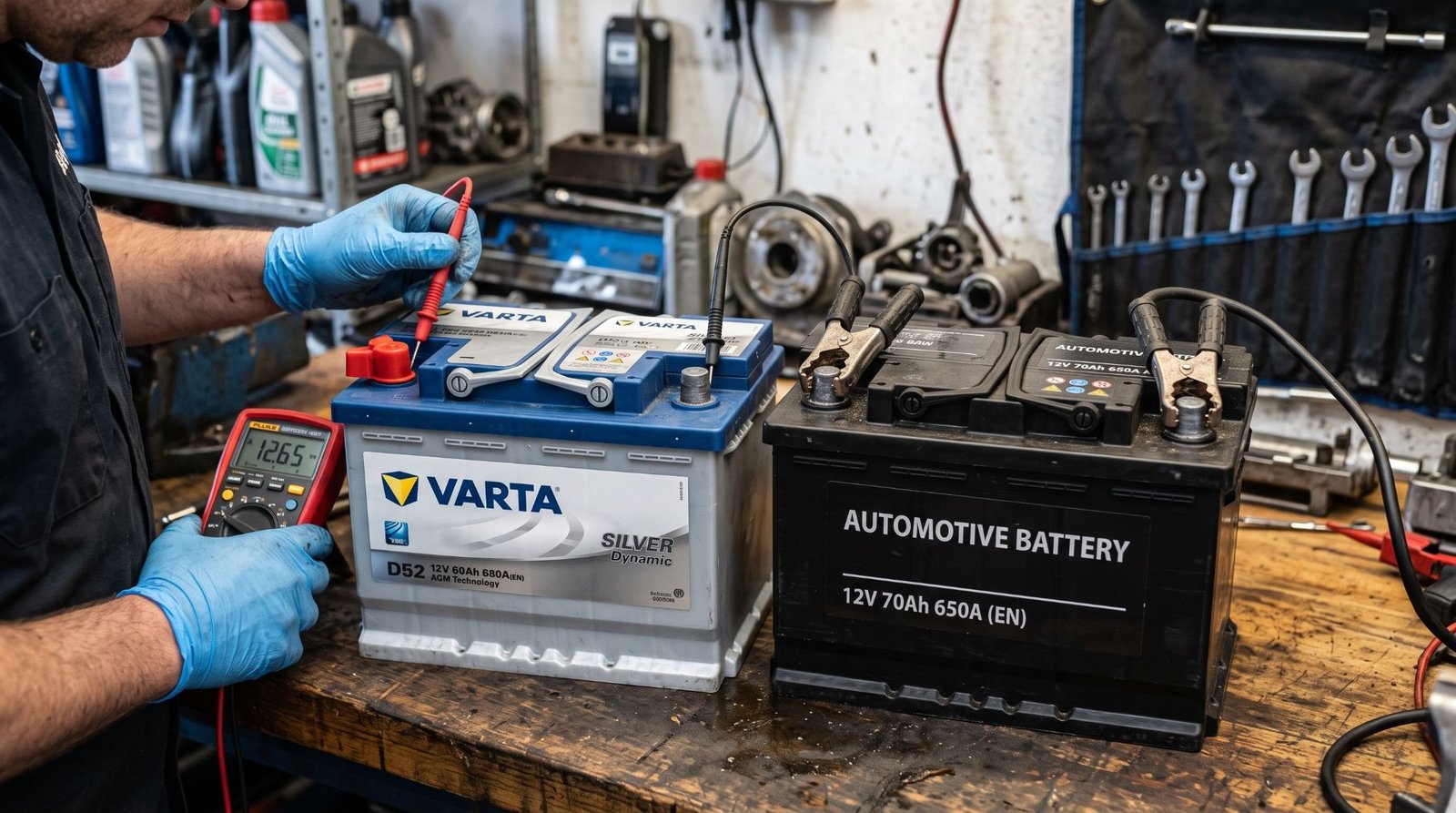
Varta batteries extend beyond that basic design with EFB (Enhanced Flooded Battery) and AGM (Absorbent Glass Mat) technology, depending on the model.
EFB batteries use a reinforced plate structure that handles roughly twice the charge cycles of a standard flooded battery, while AGM batteries bind the electrolyte in a glass fiber mat instead of letting it flow freely, which improves durability, prevents leaks, and supports significantly higher cycle life.
How Long Each Type Actually Lasts
A standard flooded battery typically lasts around three to five years under normal conditions, sometimes less in demanding climates.
EFB batteries generally last longer, thanks to their improved cycle durability, while AGM batteries push that lifespan further still, particularly in vehicles with high electrical demand or frequent short trips.
The gap isn’t marketing language. It comes down to how each design handles repeated discharge and recharge cycles, something standard batteries simply weren’t engineered to withstand as well.
Where Heat Makes the Difference Impossible to Ignore
This is where the comparison stops being theoretical for drivers in the UAE. High heat accelerates chemical breakdown inside any lead-acid battery, standard or premium, but the effect is far more pronounced in a basic flooded battery that lacks reinforced internal components.
AGM and EFB batteries handle heat more consistently, maintaining performance and charge retention even after repeated exposure to high temperatures. For a region where a car battery might spend months on end sitting in extreme heat, this isn’t a minor advantage; it’s often the deciding factor in how long a battery actually survives.
Start-Stop Systems Change the Requirements Entirely
If a vehicle has a start-stop system, this comparison becomes less about preference and more about compatibility. Standard flooded batteries generally can’t handle the constant cycling that start-stop systems demand: engine off at every red light, then an immediate restart, repeated dozens of times a day.
EFB and AGM batteries are specifically built for this kind of demand. Installing a standard battery in a start-stop vehicle typically leads to reduced start-stop functionality, faster battery degradation, or the system disabling itself to protect the battery from damage.
Maintenance and Everyday Reliability
Standard batteries are relatively low-maintenance by modern standards but still more prone to issues like corrosion buildup and gradual capacity loss compared to premium alternatives.
AGM batteries in particular are sealed and leak-proof, which removes the risk of acid exposure entirely, even if the battery casing is damaged.
For everyday reliability, this translates into fewer unexpected failures and more consistent starting power, especially during the first cold crank of the day or after a vehicle has sat unused for a stretch.
Weighing the Upfront Cost Against Long-Term Value
There’s no getting around it: Varta batteries generally cost more upfront than a basic standard battery. The value case comes from what happens after purchase: longer service life, better heat tolerance, and fewer premature replacements that end up costing more over a vehicle’s lifetime than the initial price difference ever did.
For older vehicles with minimal electrical demands, a standard battery may still be a reasonable, budget-conscious choice. For anything with start-stop technology, high electrical loads, or regular exposure to extreme heat, that calculation shifts quickly.
Which One Should You Choose?
If your vehicle requires EFB or AGM technology, the decision is largely made for you; downgrading to a standard battery risks both performance and vehicle systems.
For everything else, it comes down to how much you’re driving, how the vehicle is used, and how much you value avoiding an unexpected battery failure during a Dubai summer.
Many drivers end up upgrading to a genuine Varta Battery in Dubai from reliable suppliers , particularly before peak summer heat, since the cost difference tends to matter far less than a battery that reliably starts the car every single morning.
Conclusion
The difference between a Varta battery and a standard one isn’t just branding; it’s a genuine gap in technology, heat tolerance, and how long the battery holds up under real driving conditions.
For most drivers, especially in a climate as demanding as Dubai’s, that difference tends to show up exactly when you can least afford it to.